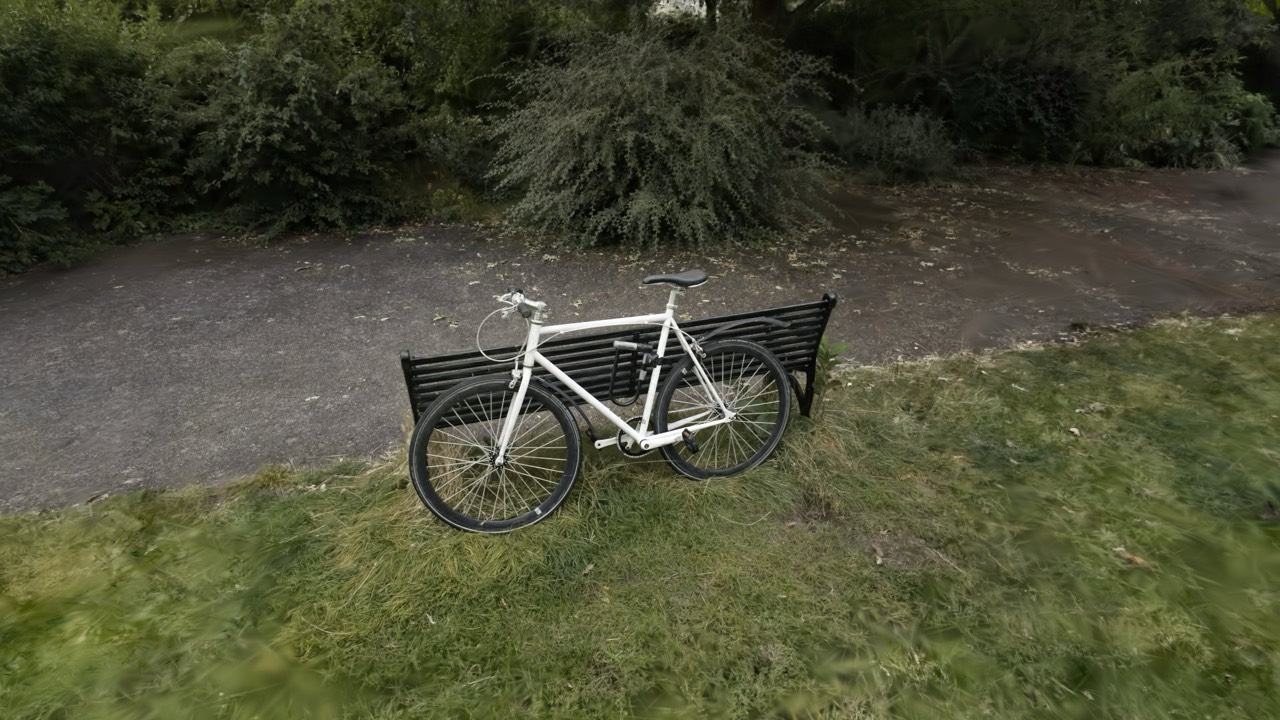
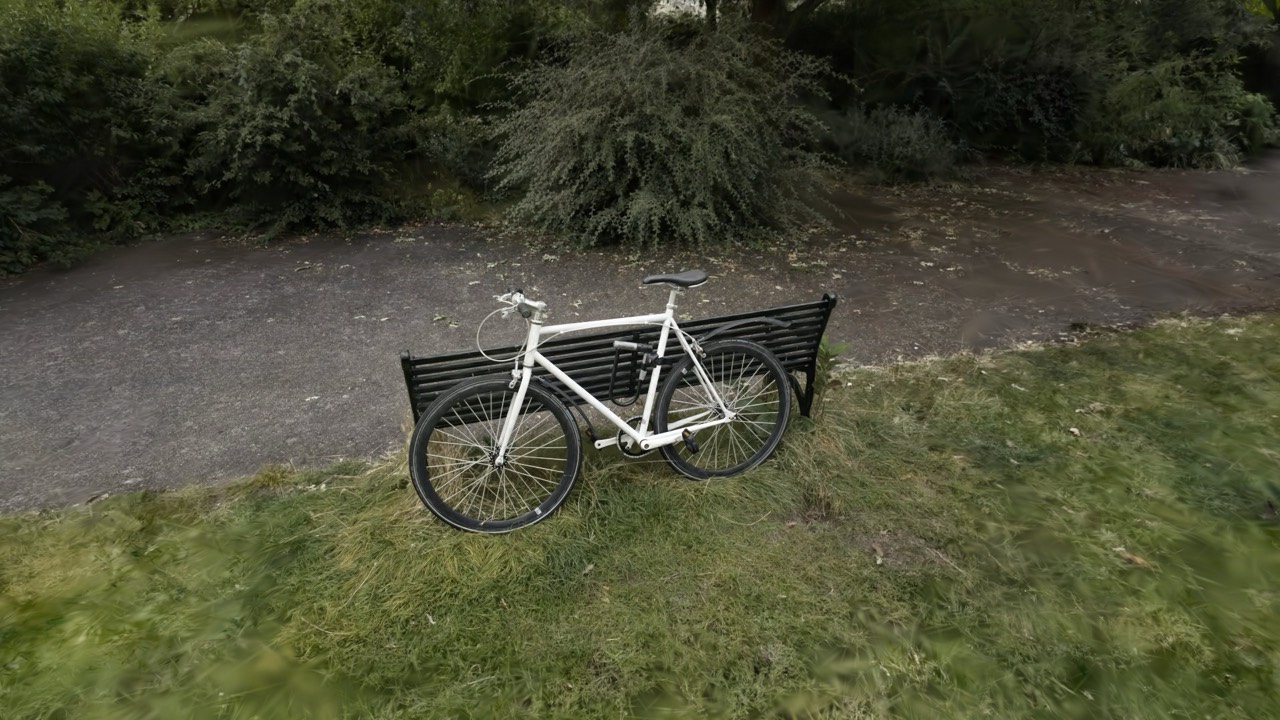
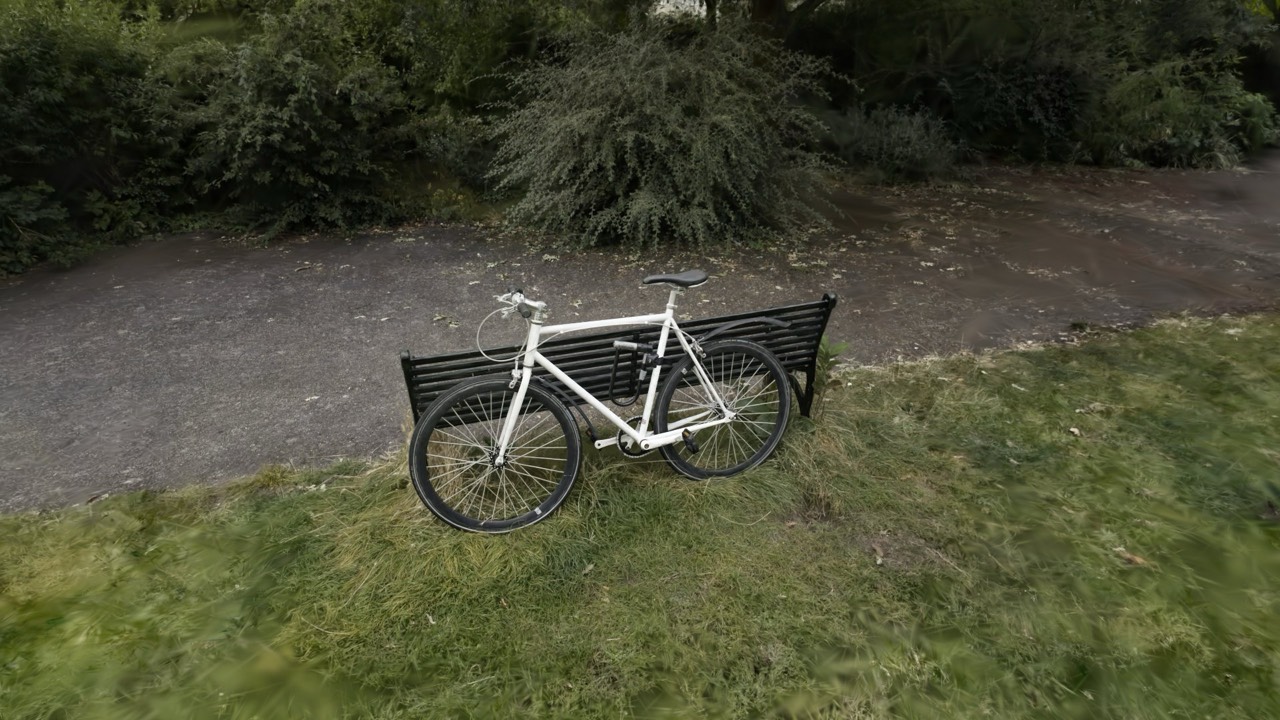
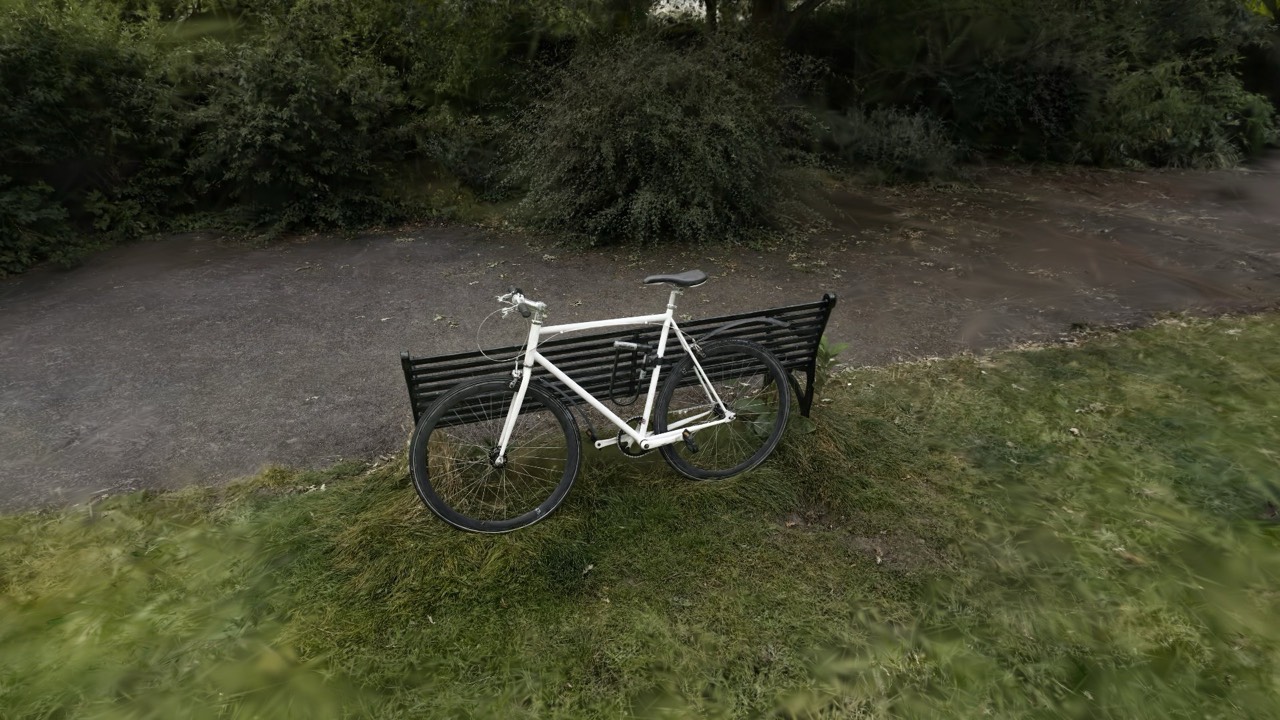
Radix, SparkJS 2.3.1, and PlayCanvas 2.23.1 drawing the same 5 scans (546k to 10.0M splats) along the same camera path. Set to cull the same splats, Radix and PlayCanvas run at about the same speed on WebGPU.
Oct 9, 2026; Apple M3 Max, Google Chrome 154.0.8037.98, 1920x1080. All results and the method: the full report.
01 · Speed
Frame times with the same culling
Radix and Spark set to cull and blur splats as PlayCanvas does by default (section 03), so all three draw the same splats. Speed relative to Radix on WebGPU: the geometric mean over the scenes of the ratio of mean frame times; longer is faster.
Radix · WebGPU
1.00×
Radix · WebGL2
0.57×
Spark · WebGL2
0.62×
PlayCanvas · WebGPU
1.03×
PlayCanvas · WebGL2
0.78×
WebGPU: Radix is 1.03× slower than PlayCanvas; the widest gap is on Grace interior (8.09 against 7.55 ms).
WebGL2, where all three sort on a worker: relative to Radix, Spark · WebGL2 1.08×, PlayCanvas · WebGL2 1.36×. Spark has no WebGPU path.
Scene
Splats
Radix · WebGPU
Radix · WebGL2
Spark · WebGL2
PlayCanvas · WebGPU
PlayCanvas · WebGL2
Butterfly
546k
3.4
4.5
3.7
3.5
3.5
Ceramic (cave)
2.0M
5.8
8.7
7.8
5.5
6.2
Sutro
2.0M
3.4
6.0
5.4
3.4
4.1
Bicycle
6.1M
4.8
12.5
12.1
4.5
9.4
Grace interior
10.0M
8.1
15.1
16.1
7.6
11.3
Mean frame time over the path in milliseconds, the median of 5 rounds, culling matched. Green: the fastest.
02 · With vsync
Frame rate in a vsync loop
The frame times above measure each frame alone. Here the same path runs in a requestAnimationFrame loop on a 120 Hz display with vsync on, as in an app, culling matched.
Scene
Splats
Radix · WebGPU
Radix · WebGL2
Spark · WebGL2
PlayCanvas · WebGPU
PlayCanvas · WebGL2
Butterfly
546k
120
120
120
120
120
Ceramic (cave)
2.0M
120
119
120
120
120
Sutro
2.0M
120
120
120
120
120
Bicycle
6.1M
120
102 (9% late)
96 (12% late)
120
120
Grace interior
10.0M
118 (2% late)
81 (23% late)
73 (27% late)
120
116 (3% late)
Frames per second, the median of 3 rounds; late: frames that missed a vsync. Green: full rate.
Over the 8.30 ms budget when timed, but at full rate with vsync (consecutive frames overlap CPU and GPU work): Radix · WebGL2 on Ceramic (cave) (8.74 ms, 119 fps); PlayCanvas · WebGL2 on Bicycle (9.36 ms, 120 fps).
Under the budget when timed, but dropping frames with vsync: Radix · WebGPU on Grace interior (8.09 ms, 118 fps).
Frame rate (capped by the display, which shrinks differences): Radix on WebGPU 1.00× PlayCanvas on WebGPU; on WebGL2, Spark 0.97× and PlayCanvas 1.11× Radix.
By default PlayCanvas skips splats drawn under a 1-pixel radius and, on WebGPU, splats whose opacity × area is under 0.75 px². Radix and Spark draw them, as the reference 3DGS rasterizer does. The culls are aggressive: on WebGPU they remove most of the bicycle's wheel spokes (section 04). PlayCanvas's dilation is also fixed at 0.075 px², a quarter of the 0.3 px² of standard 3DGS training, so its splats are drawn smaller than trained. So at defaults PlayCanvas does less work per frame, and on WebGPU Radix is 1.30× slower than it. With no culling in any renderer, Radix on WebGPU is 1.05× slower than PlayCanvas.
Culling
Radix · WebGPU
Radix · WebGL2
Spark · WebGL2
PlayCanvas · WebGPU
PlayCanvas · WebGL2
Defaults
1.00×
0.67×
0.73×
1.30×
0.98×
No culling
1.00×
0.67×
0.72×
1.05×
0.92×
Matched culling
1.00×
0.57×
0.62×
1.03×
0.78×
Speed relative to Radix on WebGPU with the same setting. Matched: Radix and Spark with PlayCanvas's default culling and blur. No culling: every renderer draws every splat above alpha 1/255.
The same culling makes Radix on WebGPU 1.26× as fast as its defaults, through objectParams.minContribution, minPixelRadius, and params.minAlpha. PlayCanvas's thresholds are set in half pixels (it measures splats with twice the focal length), so its minContribution: 3 is 0.75 here.
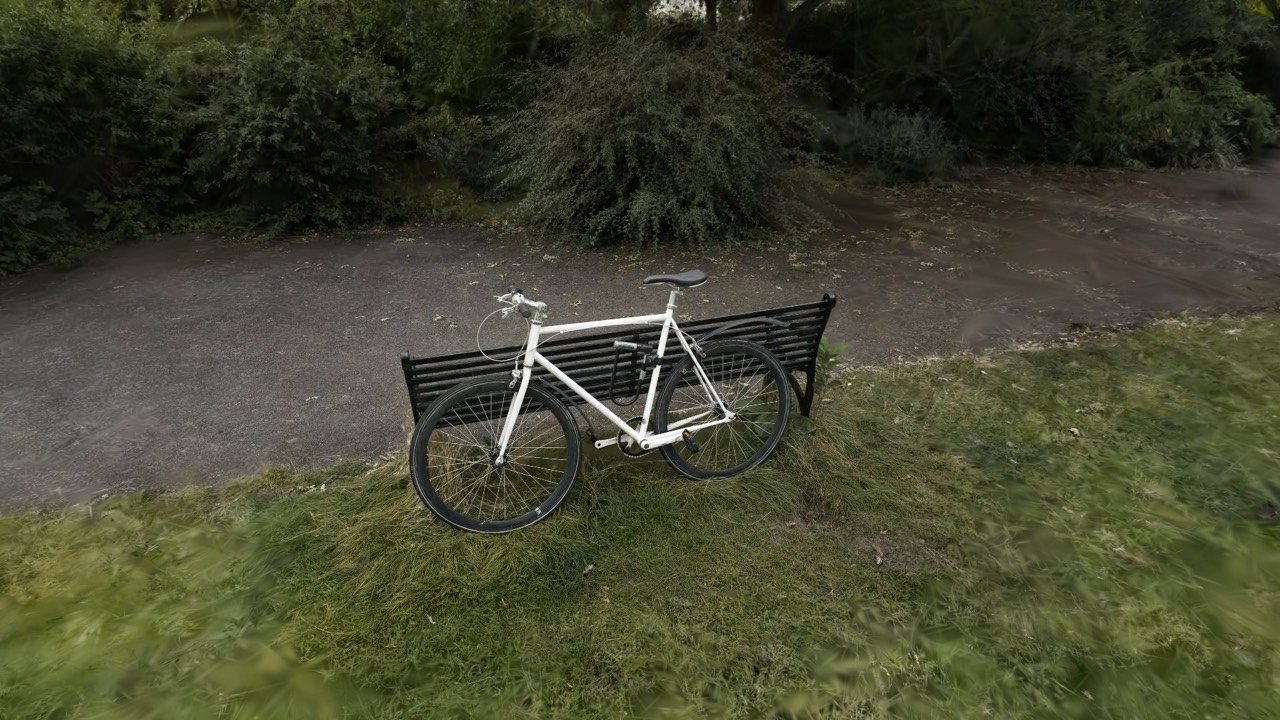
The bicycle scan (6.1M splats) from the benchmark's start view, with each renderer's defaults; Radix and Spark use blurAmount: 0, preBlurAmount: 0.3, as the scan was trained without anti-aliasing. PlayCanvas on WebGPU culls faint splats by default, which removes most of the wheel spokes.
Click an image to enlarge it; ← and → step between them, Esc closes.
05 · Known gaps
Where Radix is behind
Re-sort stalls on WebGL2. Radix's worker-sort cycle (a keys pass, a readback, then the order's upload) lands in rendered frames: 724 frames took over twice the median across the scenes at defaults, against 7 for Spark and PlayCanvas on WebGL2.
Loading. From the start of loading a PLY to the first frame: Radix 0.3 to 2.2 s, Spark 0.1 to 1.6 s, PlayCanvas 0.3 to 5.0 s.
06 · Method
How it was measured
Every renderer loads the same degree-0 PLY of each scan (Radix has no spherical harmonics) and draws the same camera poses: held still, a level turn, then a tilted turn, orbiting objects and looking around inside scenes.
Frames are drawn one at a time, each timed until the GPU has finished it, after a warm-up of at least 3 seconds. Each configuration ran 5 rounds in a shuffled order, in a fresh tab, with the laptop's thermal state and a canary configuration checked between runs.
The matched culling was checked on a grid of splats of known size and opacity: the renderers drew or culled the same splats, apart from a few right at a threshold.